





Today we’d like to introduce you to Gerhard Maale.
Hi gerhard, please kick things off for us with an introduction to yourself and your story.
My story begins with a lifelong interest in animals, science, genetics, and the outdoors. I earned my undergraduate degree in Marine Biology from Texas A&M University at Galveston, where I spent a great deal of time scuba diving and eventually became a dive master. That led me into a cave-diving geology program and later to a Master’s degree in Marine Resource Management. My thesis focused on microfossil analysis in underwater caves, and that work gave me a strong appreciation for biology, adaptation, genetics, and the way living systems respond to their environment.
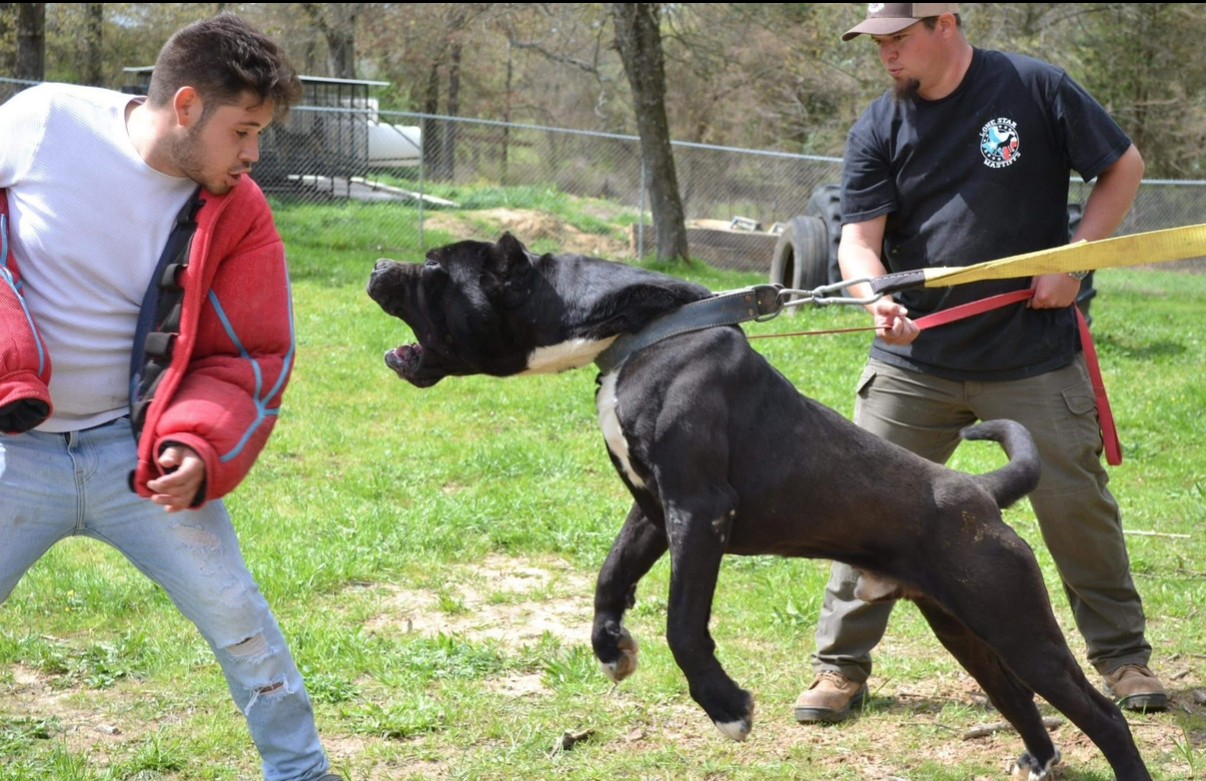
After graduate school, my path took several turns. I worked on fishing vessels in the Bering Sea, spent time in sales and advertising within the firearms industry, and eventually moved into professional dog training. I became a certified dog trainer through a rigorous program focused on police and military working dog applications. That experience became the foundation for Lone Star Mastiffs.
I started Lone Star Mastiffs from scratch in Winnsboro, Texas, with the goal of breeding and training serious working dogs. Over time, that work grew into the development of the Lone Star Mastiff, a functional working mastiff breed built around temperament, health, structure, stability, and real-world usefulness. These dogs are bred to be family and property guardians, farm and ranch protectors, and estate security dogs. The goal has always been to produce dogs that are powerful and protective, but also clear-headed, trainable, stable in the home, and capable of making good decisions around families and livestock.
In 2019, we purchased our farm property near Winnsboro and began building Lone Star Mastiffs Farms from the ground up. The land was largely undeveloped, so the early years were spent building the basic infrastructure: fencing, kennels, buildings, water lines, electrical systems, ponds, animal areas, growing spaces, and farm systems. Most of that work was done by myself, friends, family, and a small amount of hired help. What began as a dog breeding and training property gradually became a much broader farm.
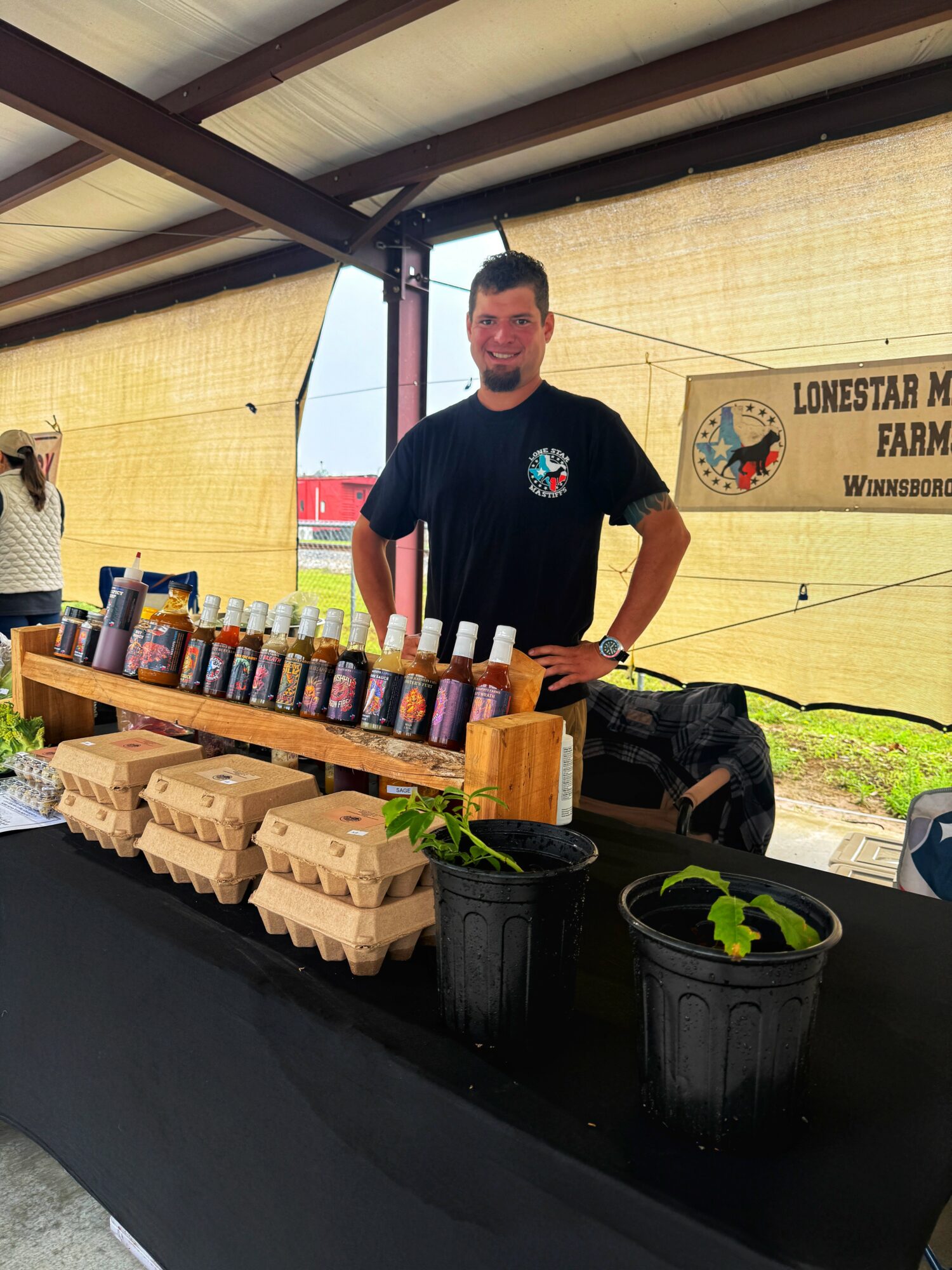
Today, Lone Star Mastiffs Farms is a working farm with vegetables, fresh peppers, livestock, meat, eggs, hot sauce, pepper products, a hoop house, and now an underground walipini greenhouse. We grow using organic-minded practices and do not use glyphosate, 2,4-D, or GMO products. The farm has become a place where animal genetics, plant genetics, food production, and sustainability all come together.
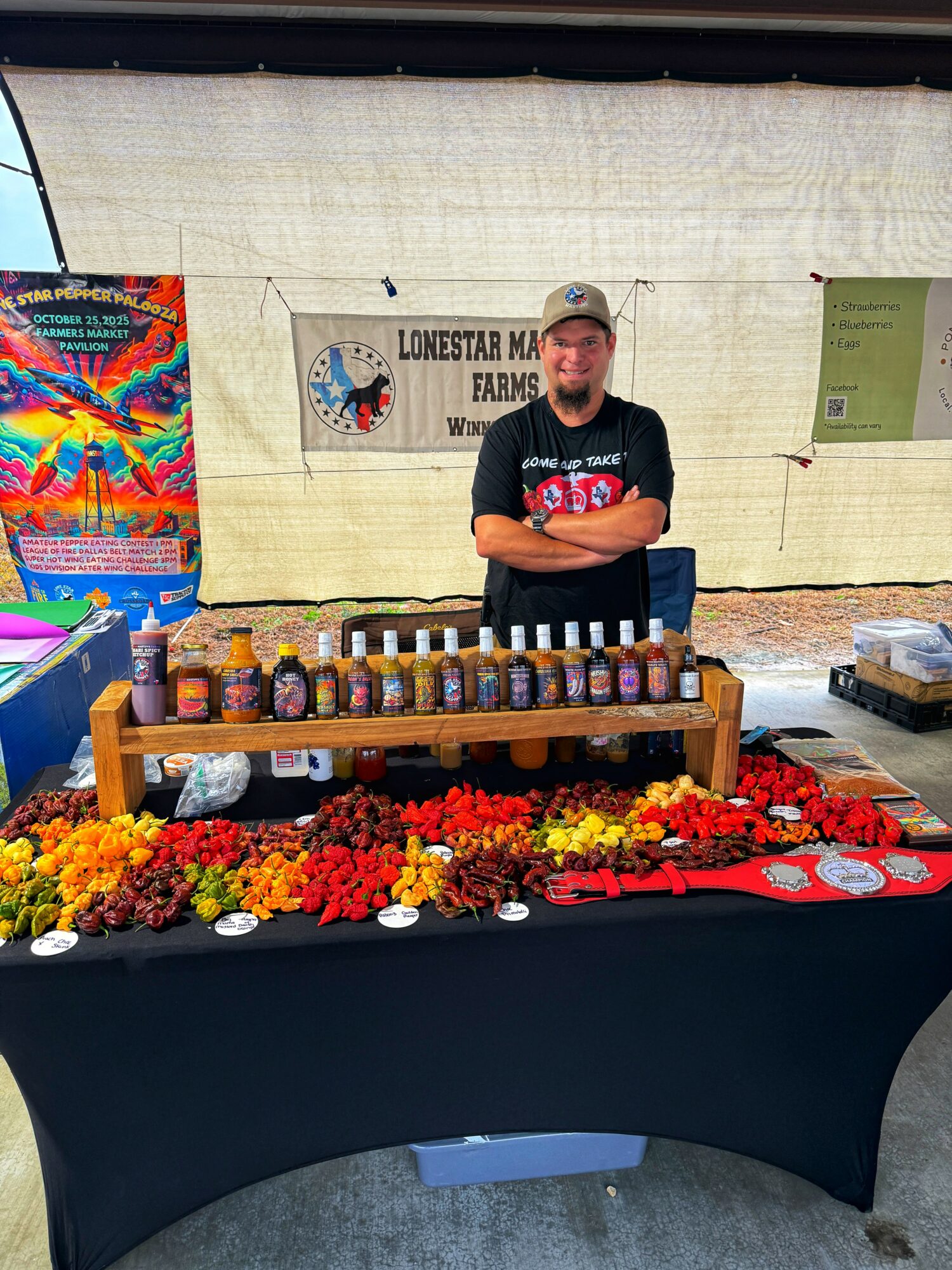
The pepper side of the farm started in 2022 as a friendly competition between my brother and me. We began growing super-hot peppers, and I quickly realized there was a strong market for rare and extreme pepper varieties. After our peppers were featured by Johnny Scoville on “Chase The Heat,” demand grew quickly, and in 2023 we sold around 2,000 boxes of peppers. That success led us into hot sauces and other pepper-based products, and the farm has continued expanding into fresh pods, seeds, seasonings, BBQ sauces, jams, jellies, and other value-added products.
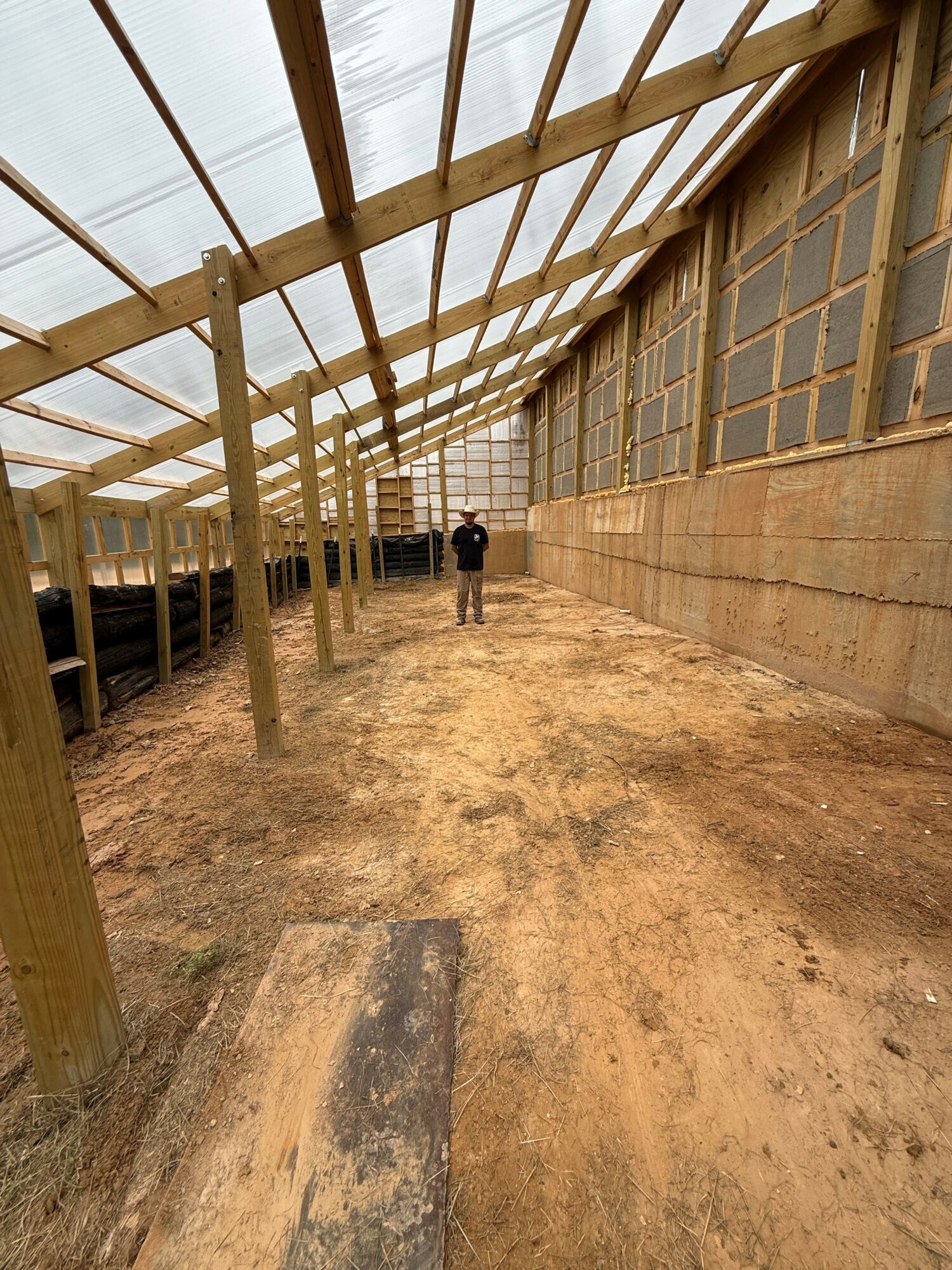
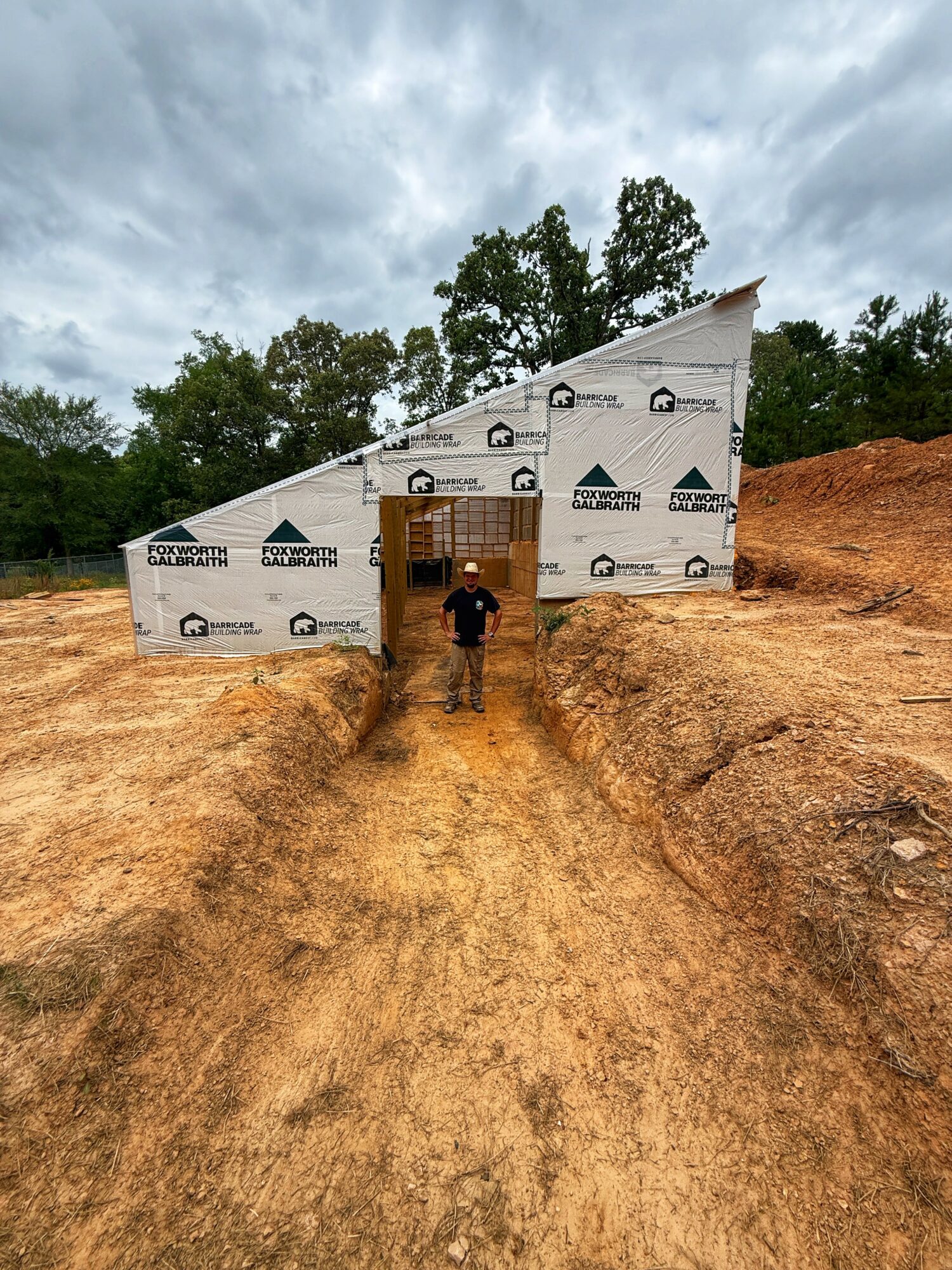
The biggest project on the farm now is our underground walipini greenhouse. For us, the walipini is more than just a greenhouse. It is the next step in making the farm more resilient and productive. East Texas weather can be unpredictable, and super-hot peppers are valuable plants that take a long time to mature. A hard freeze can wipe out years of work. The walipini allows us to use the earth itself as insulation, creating a protected growing environment where we can stabilize temperature and humidity, extend the season, and eventually grow peppers and tropical crops year-round.
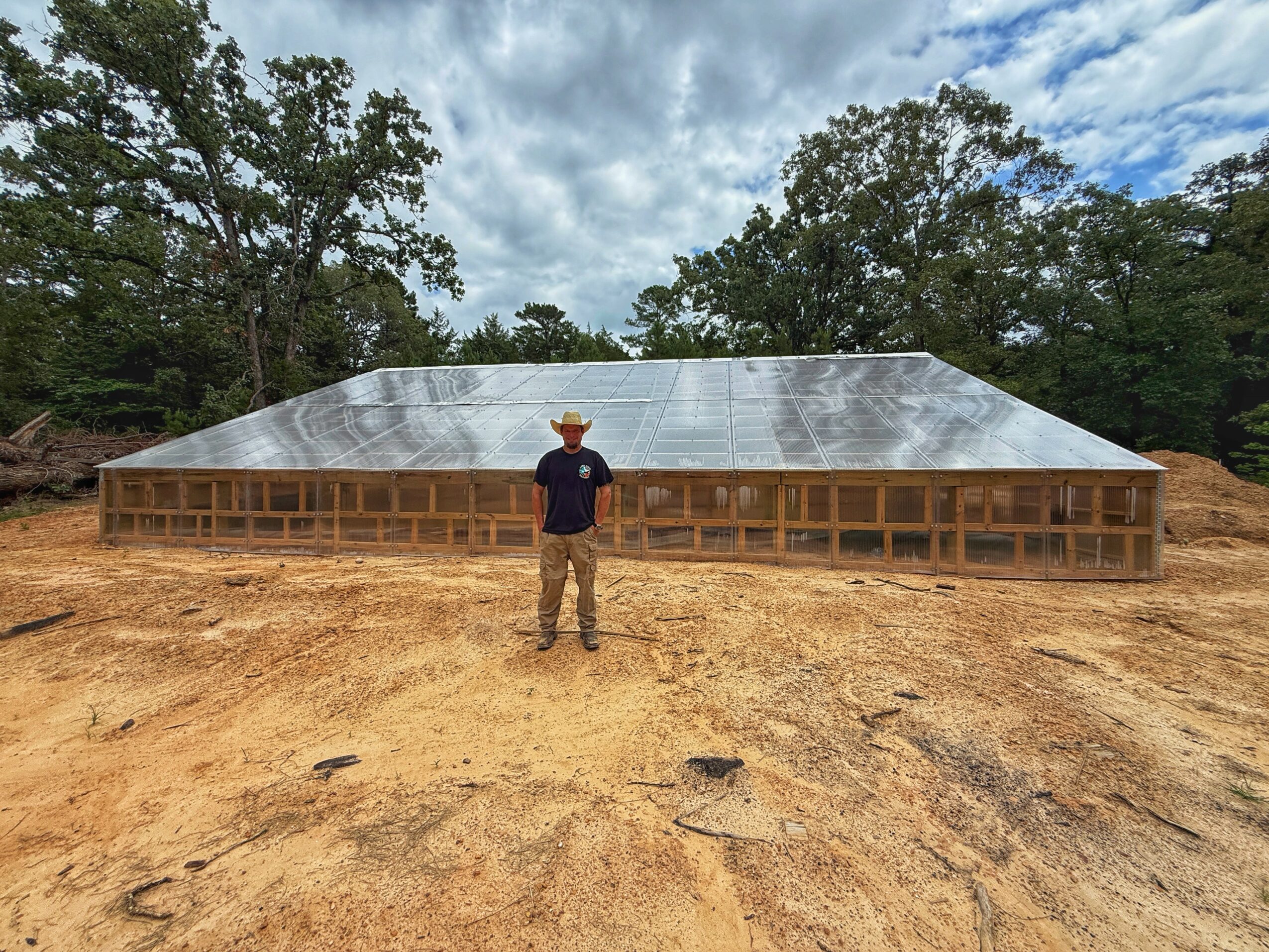
We recently completed the main walipini structure after a very difficult build. It was a major construction project involving excavation, framing, wall work, polycarbonate roofing, ventilation planning, drainage, and a lot of problem-solving. The goal is to create a warm, humid, rainforest-like microclimate where we can overwinter mature super-hot pepper trees and grow tropical crops such as citrus, bananas, papaya, guava, mango, dragon fruit, pineapple, and other specialty plants.
The next stage is monitoring the temperature and humidity inside the structure, tuning the ventilation system, and slowly transitioning mature pepper plants and tropical crops into the space. Once it is fully dialed in, the walipini should allow us to produce peppers much closer to 365 days a year and supply more of our hot sauce ingredients directly from our own farm.
Looking back, the story has really been about building one layer at a time. I started with science and animals, built a working dog business, turned raw land into a farm, discovered a market for super-hot peppers, launched a hot sauce company, and now built an underground greenhouse to push the farm into year-round production. Lone Star Mastiffs Farms has become a combination of working dogs, agriculture, genetics, food production, and hands-on problem-solving. The walipini represents where all of those pieces come together.
We all face challenges, but looking back would you describe it as a relatively smooth road?
It has definitely not been a smooth road. Almost every part of this business has been built from the ground up, and that means there have been a lot of hard lessons along the way.
When we purchased the farm property, it was not a finished farm. There was no complete system waiting for us. We had to build the infrastructure ourselves: fencing, kennels, water lines, electrical systems, ponds, animal areas, growing spaces, and the basic layout of the farm. That kind of work is expensive, physically demanding, and time-consuming. A lot of it was done by myself, with help from friends, family, and a small amount of hired labor.
The dog side of the business also came with its own challenges. Breeding serious working dogs requires a long-term commitment to temperament, health, structure, training, and responsible placement. You cannot take shortcuts. It takes years to build consistent lines, evaluate dogs honestly, and produce animals that are both capable working guardians and stable family companions.
The farm side has been just as challenging. Growing vegetables and super-hot peppers in East Texas means dealing with heat, drought, heavy rain, insects, disease pressure, and sudden freezes. Peppers, especially rare super-hot varieties, are not always forgiving. Many of them take a long time to mature, and one weather event can set you back months or even wipe out plants you have invested years into.
The walipini greenhouse has probably been one of the hardest projects we have ever taken on. Building an underground greenhouse sounds simple in theory, but in practice it involved excavation, drainage, framing, retaining walls, roofing, polycarbonate panels, ventilation, insulation, and constant problem-solving. What makes it even more meaningful is that the structure was built by just me and one other person, without fancy equipment or a large construction crew. It was a hands-on build from start to finish, and every stage required us to figure things out, adapt, and keep pushing forward.
There were plenty of moments during the build where it would have been easier to stop, scale back, or do something simpler. We were working with a limited budget, unpredictable weather, and a structure that had to be strong enough to hold up long-term while still creating the right growing environment inside. But the purpose of the walipini made it worth it. We are trying to create a protected microclimate where we can overwinter mature pepper plants, grow tropical crops, stabilize production, and eventually produce peppers much closer to year-round. For a farm that is building a hot sauce company around its own peppers, that kind of infrastructure can be a game changer.
Another major struggle has been balancing growth. Lone Star Mastiffs Farms is not just one business. It includes dog breeding, dog training, livestock, vegetables, fresh peppers, meat, eggs, hot sauce, seeds, seasonings, jams, jellies, farmers markets, online sales, a hoop house, and now the walipini. Each part of the business requires time, labor, money, and attention. The challenge has been learning how to grow without losing the hands-on quality that made the business work in the first place.
So no, it has not been smooth. But I think that is also what makes the story meaningful. The farm has been built through trial and error, physical labor, problem-solving, and persistence. Every fence, every building, every pepper plant, every litter of dogs, and now the walipini represents another step in turning raw land and an idea into a real working farm.
We’ve been impressed with Lone Star Mastiffs and Lone Star Mastiffs Farms, but for folks who might not be as familiar, what can you share with them about what you do and what sets you apart from others?
Lone Star Mastiffs Farms is a working farm, dog breeding and training program, and value-added food business located in East Texas. What makes the business unique is that it is not just one thing. It is a combination of working dogs, specialty agriculture, livestock, fresh food, hot sauce, and long-term farm infrastructure.
Lone Star Mastiffs began as a serious working dog program. We specialize in guardian dogs bred for real-world function: family protection, estate security, farm and ranch protection, and livestock/property guardianship. The foundation of our dog program is temperament, health, structure, stability, and usefulness. We are not breeding dogs simply for appearance. We are focused on producing stable, confident, capable working dogs that can live with families, protect property, and perform a job.
One of the things I am most proud of is the development of the Lone Star Mastiff as a breed. That has taken years of planning, selection, evaluation, and hard decisions. Building a breed is not about producing one good dog. It is about creating consistency over generations while maintaining the traits that matter most: health, nerve, intelligence, structure, trainability, and stable protective instinct.
The farm side of the business has grown alongside the dog program. Lone Star Mastiffs Farms produces fresh vegetables, fresh peppers, eggs, livestock, meat, seeds, seasonings, jams, jellies, BBQ sauces, and hot sauces. We are especially known for super-hot peppers and rare pepper varieties. What started as a small growing project became a major part of the farm after we found a strong market for fresh super-hot peppers. That eventually led to our hot sauce company, which now includes a growing lineup of sauces made around the peppers we produce.
Our pepper program is one of the things that sets us apart. We grow a wide range of super-hot and specialty pepper varieties, including rare types that most people will never see in a grocery store. We also work on developing our own pepper varieties. For us, peppers are not just a crop. They are a genetics project, a food product, and a central part of the brand.
Another major part of what sets us apart is the way we are building the farm itself. We started with raw land and built the infrastructure step by step: fencing, kennels, animal areas, ponds, growing areas, a hoop house, and now an underground walipini greenhouse. The walipini is one of the biggest projects we have completed and one of the most important pieces of our future. It was built by myself and one other person without a large crew or fancy equipment. The goal is to create a protected, earth-insulated growing environment where we can overwinter mature pepper plants, grow tropical crops, stabilize production, and eventually produce peppers closer to year-round.
That matters because our hot sauce company is tied directly to what we grow. We are not just buying generic peppers and putting a label on a bottle. We are trying to build a farm-based brand where the ingredients, the plants, the animals, and the products all come from the same place and tell the same story.
We also take pride in our growing practices. Lone Star Mastiffs Farms does not use glyphosate, agrochemicals, unnatural fertilizers or GMO products. We are building the farm around sustainable, practical, better than organic-minded production methods. The goal is to produce food in a way that is clean, functional, and connected to the land.
What I want readers to know is that Lone Star Mastiffs Farms is a hands-on, ground-up business. We are not a corporate farm, and we are not a mass-production kennel. We are building something personal and functional: serious working dogs, specialty peppers, hot sauces, fresh food, livestock, and infrastructure designed to make the farm more resilient. Everything we do is tied together by the same core ideas: genetics, hard work, sustainability, independence, and producing something real.
If we knew you growing up, how would we have described you?
I had a very unusual and interesting upbringing. I was born in Dallas, Texas, but I spent much of my childhood growing up in the Bahamas and Turks and Caicos. My family had a small plantation in the Bahamas, so I grew up around tropical farming, the ocean, and a very different way of life than most kids experience.
We did not have easy access to grocery stores or processed foods. Most of what we ate was either grown, raised, or caught. My brother and I would go spearfishing, lobstering, and conching almost every day to help provide dinner. My parents both worked and owned companies in Dallas, so they were not always with us, and that forced us to become very independent at a young age. We learned how to fend for ourselves, solve problems, and live from what the land and ocean provided.
That mentality has followed me throughout my entire life. Whether I was working in Alaska, building Lone Star Mastiffs, or developing the farm in East Texas, I have always been drawn to self-sufficiency, nature, animals, and living close to the land. I genuinely enjoy being outside, working with my hands, and building systems that allow me to live more independently. I have always loved the idea of living off the land and using the resources around me rather than depending entirely on modern convenience.
Personality-wise, I was adventurous, independent, curious, and probably a little restless. I liked being outdoors, exploring, diving, fishing, hunting for food, and learning how natural systems worked. That eventually grew into my interest in marine biology, genetics, farming, dogs, and animal behavior.
When I came back to Dallas for high school, my life changed in a lot of ways. I became very social during high school and college, and I developed a strong network of friends. Many of those people are still my closest friends today. So I think I have always had two sides: one side that loves people, community, and relationships, and another side that is most at peace in nature, off-grid, working with animals and plants, and building something with my own hands.
Looking back, it makes sense that I ended up doing what I do now. Lone Star Mastiffs Farms is really a continuation of the way I grew up: farming, raising animals, growing food, working with genetics, living close to nature, and building a life around self-sufficiency.
Pricing:
- Lone Star Mastiffs $3500
- Live Stock Guardian Dogs $3500
- Hot Sauce $15-30
- Hot honey $15
- Labled Super Hot Fresh Pepper Boxes $55
Contact Info:
- Website: https://farm.lonestarmastiffs.com/
- Instagram: https://www.instagram.com/lonestarmastiffsfarms/
- Facebook: https://www.facebook.com/people/Lone-Star-Mastiffs-Farms/100079848995607/
- Other: https://lonestarmastiffs.com/ https://www.instagram.com/lonestarmastiffs/