



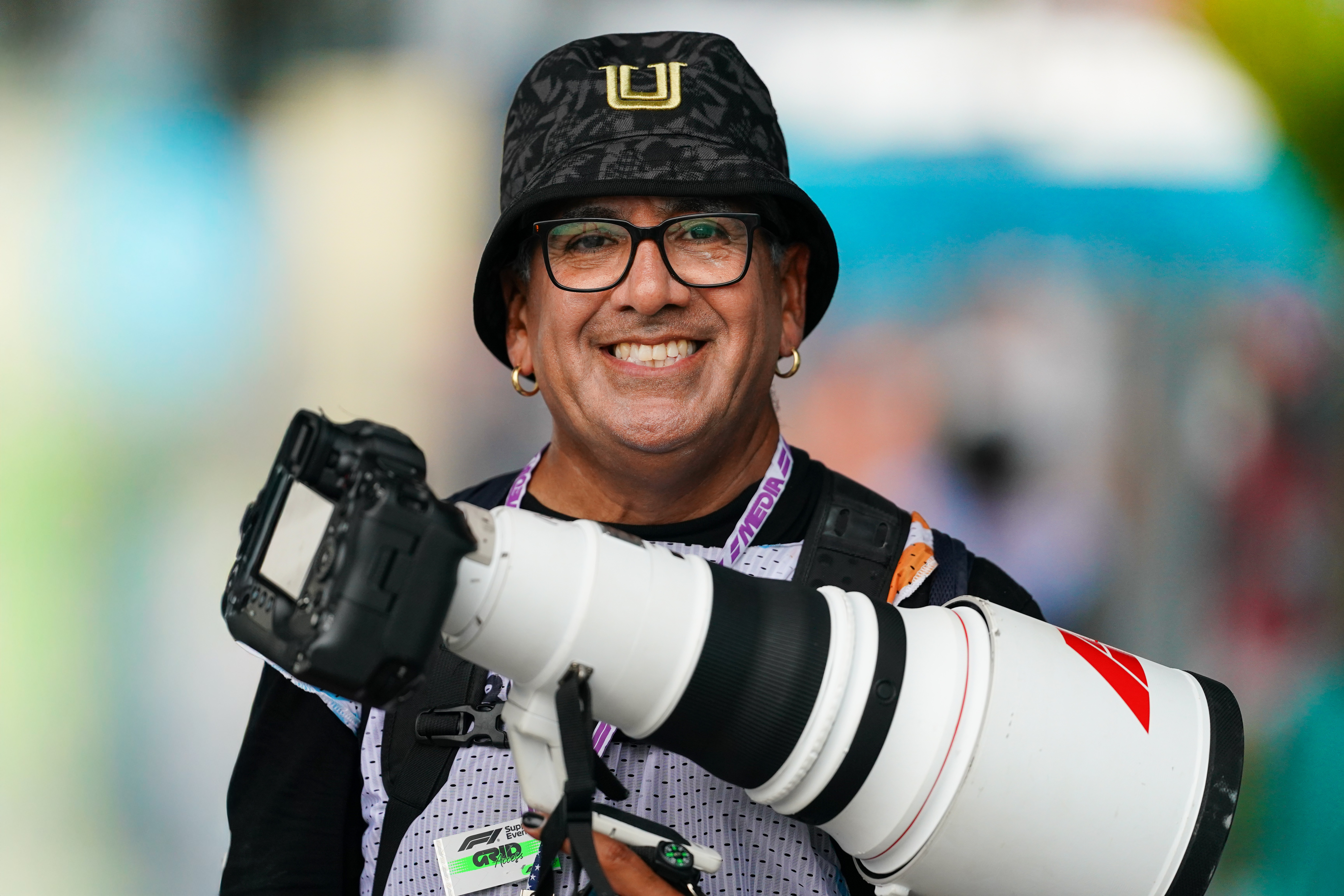
Today we’d like to introduce you to Art Vega.
Hi Art, please kick things off for us with an introduction to yourself and your story.
I was always the kid with a camera. Long before photography became a profession, I enjoyed documenting moments and finding creative ways to tell stories through images. What began as a hobby eventually grew into something much bigger.
Born in Mexico, I’ve had the opportunity to live in several countries, including the UK, Canada, the Dominican Republic, and Puerto Rico before eventually settling in Dallas in 2014. Growing up and living in different cultures gave me a broader perspective on people and storytelling, something that has influenced both my photography and the way I see the world. Looking back, that international background probably prepared me well for a career that now takes me to Formula 1 circuits around the world. Dallas has been home for more than a decade, and it’s where I’ve built both my professional career and my photography career.
In 2017, I started working professionally as a portrait photographer. At the same time, I had a lifelong passion for motorsports, and in 2018 I was given the opportunity to cover racing events in the United States for a Mexican motorsports publication. That experience combined two things I loved—photography and racing—and completely changed the direction of my photography career.
Since then, I’ve had the opportunity to photograph some of the world’s biggest motorsport championships, including Formula 1, NASCAR, IndyCar, MotoGP, IMSA, Formula E, and the FIA World Endurance Championship. Over the last few years, my work has become increasingly focused on Formula 1, covering races throughout the Americas, Europe, and the Middle East. This year, in addition to my work with the publication that helped launch my motorsports career, I also began working with a European photography agency.
Earlier this year, I launched a podcast called “Art in the Paddock,” where I interview some of Formula 1’s most respected photographers. The conversations explore their journeys into the sport, the realities of working at the highest level of motorsports, and the stories behind some of their most memorable images.
My goal as a motorsport photographer is to showcase the speed, motion, and emotion that make racing so compelling. I’m particularly drawn to panning photography, using slower shutter speeds to convey the sense of movement and energy that fans experience trackside. At the same time, I’m always looking for the stories that shape a race weekend—whether it’s the intensity of a Formula 1 race, a decisive moment in the garage, or the emotion of a victory celebration. My goal is to create images that help people feel connected to the sport. Looking back, it’s incredible to think that a childhood interest in photography has led me to Formula 1 paddocks around the world.
Can you talk to us a bit about the challenges and lessons you’ve learned along the way. Looking back would you say it’s been easy or smooth in retrospect?
It definitely has not been a smooth road. Formula 1 is one of the most competitive environments in photography, and gaining access is only the first step. Once you’re there, you’re working alongside some of the best motorsport photographers in the world—many of whom have been covering the sport for 20 or 30 years. Earning respect and staying relevant requires constant learning, consistency, and the ability to keep producing strong work under pressure.
One of the biggest challenges for me was building relationships within such a small and close-knit community. When I first started, I was often the new guy in a media center filled with photographers whose work I had admired for years. It took time, patience, and many race weekends to earn trust and establish meaningful connections.
Ironically, those relationships have become one of the most rewarding parts of the journey. Today, some of the photographers who once inspired me from afar are people I can call friends and colleagues. In many ways, that’s also what inspired me to launch the “Art in the Paddock” podcast. Every photographer has a different path into the sport, and I wanted to share the challenges, sacrifices, and lessons behind careers that many fans only see from the outside.
Thanks – so what else should our readers know about your work and what you’re currently focused on?
I specialize in motorsport photography, with a particular focus on Formula 1. While many sports photographs are designed to freeze a moment in time, I am especially drawn to images that convey speed, motion, and energy. Over the years, I have become known for my panning photography, using slower shutter speeds to create images that allow viewers to feel the intensity and movement of the cars rather than simply observe them.
What I enjoy most is finding creative ways to portray a sport where fractions of a second can make the difference between victory and defeat. Whether it’s a dramatic panning shot, changing weather conditions, or an unusual perspective, I am constantly looking for ways to create images that stand out while remaining true to the story of the race.
What were you like growing up?
Growing up, I was always a very visual person. I loved looking through sports and automotive magazines and could spend hours studying the photographs. Long before I understood the technical side of photography, I was fascinated by the way a single image could tell a story or capture the excitement of a moment.
I also developed an early passion for cars and motorsports, even though nobody in my family was particularly interested in racing or the arts. I come from a humble background, so many of the things that would later become important parts of my life started simply as curiosity and personal interests.
Personality-wise, I’ve never been the most outgoing person in the room. I’ve always been more of an observer, which in many ways is a useful trait for a photographer. I tend to form a small circle of close friendships and keep those relationships for years.
One thing I remember clearly is always dreaming about traveling and seeing the world. As a kid growing up in Mexico, Europe felt incredibly far away, almost like a different world. Later in life, opportunities to travel and live in different countries broadened my perspective and exposed me to new cultures, experiences, and ways of thinking. Looking back, those experiences helped shape not only who I am as a person, but also how I see and photograph the world today.
Contact Info:
- Website: https://artvegaphoto.smugmug.com/
- Instagram: https://www.instagram.com/artvegaphoto/
- Youtube: https://www.youtube.com/@ArtinthePaddock