


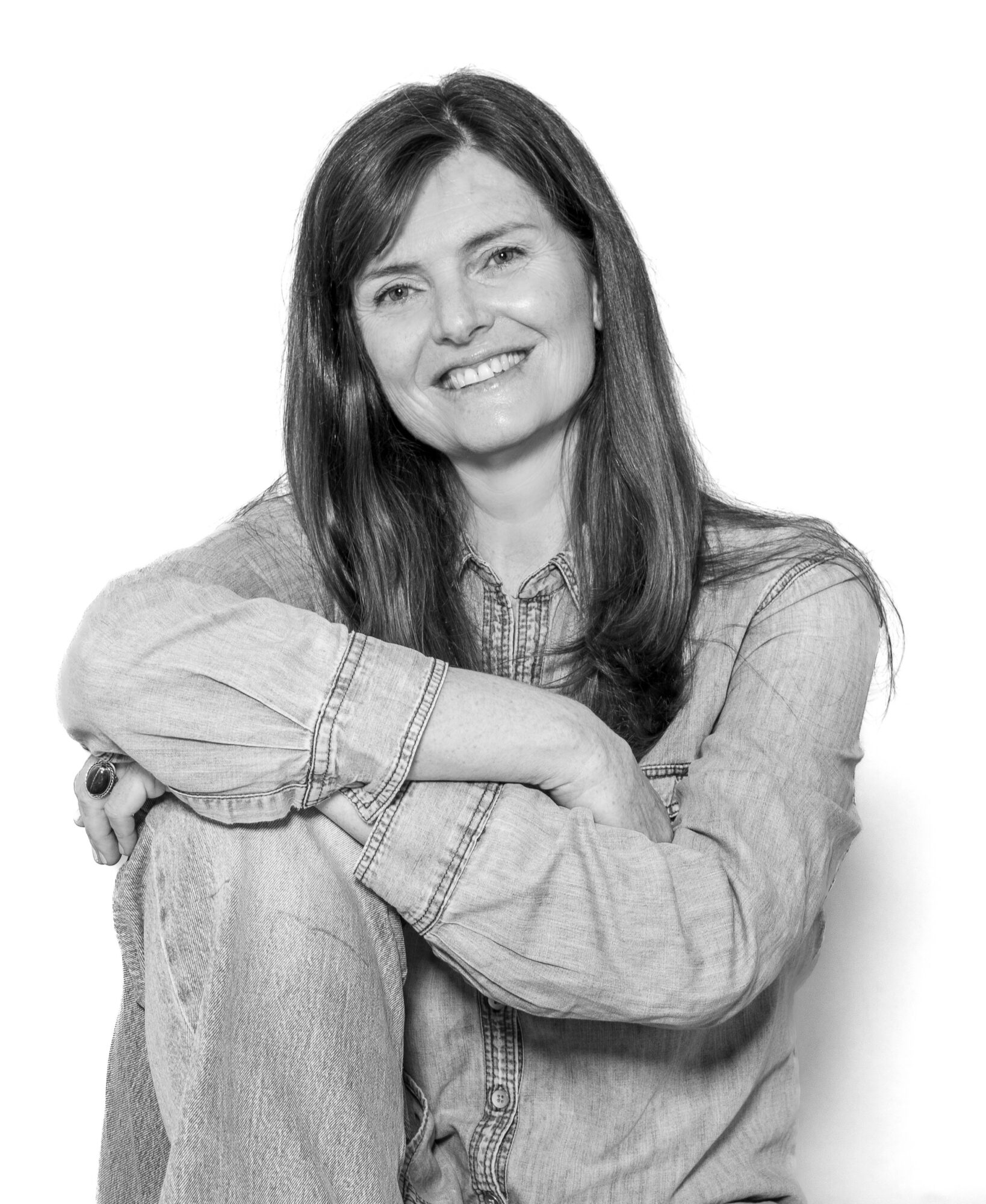
Today we’d like to introduce you to Carolina Baldomá.
Hi Carolina, thanks for sharing your story with us. To start, maybe you can tell our readers some of your backstory.
I’m a visual artist from Argentina, and I live and produce my work immersively in the Argentine Pampas. I have always lived in close relation to nature, and this contact has shaped the way I see and understand the world.
My path to becoming an artist has not been a linear one. Alongside my artistic interests, I also studied and worked as an agricultural economist. For many years, these two paths developed in parallel — one grounded on professional work related to the land, and the other in a more intuitive and visual exploration through photography and lived experience in rural environments.
I also spent several years living in a very disconnected rural environment, far from urban centers, with no internet connection and very poor telephone reception. That experience of living in close contact with the land, attuned with the rhythms of nature, had a strong impact on how I relate to time, observation , and the natural world, and became a fundamental part of how I developed my visual sensibility.
My interest in image-making has always been present, even if not yet as a full-time practice. It became a way of staying connected to the landscape and processing my experience of place over time.
During the pandemic, I returned to that same rural environment. This period of deep introspection led me to rethink my life and gave me the clarity and courage to fully commit to becoming an artist. It also gave me the time and space to begin experimenting more deeply and consistently with sun-based photographic processes, such as cyanotypes, anthotypes, and chlorophyll prints. This experience marked the beginning of a new chapter in my life as an artist.
Alright, so let’s dig a little deeper into the story – has it been an easy path overall and if not, what were the challenges you’ve had to overcome?
Throughout my career, the main obstacles and challenges have been closely tied to geography, Access and timing.
I began pursuing my artistic path later in life. I first built my professional career in agricultural economics, and later stepped away from it to focus on raising three children, while maintaining a parallel creative practice.
In earlier stages, especially when I was younger, it was difficult to imagine a sustainable artistic practice in the context where I lived. So I chose the path that was expected of me at the time, which allowed me to work and live independently.
I also spent several years living in rural environments far from urban centers, with limited access to education and opportunities to develop my artistic practice. Although I had previous formation in photography, I had limited access to connect with the contemporary art field.
The pandemic marked an important shift. While it was initially a moment of isolation, it also brought new forms of connectivity to the rural context where I was living.
Since then, I have significantly expanded my artistic education. I have completed one master’s program, and I am currently completing another. I have also taken part in numerous workshops and courses. This period allowed me to reconnect more actively with the contemporary art field and to engage more consistently with artistic practices.
Another ongoing challenge is the distance from the places where contemporary art is exhibited and circulated.
I also believe that age can be a structural challenge in the art world, as many programs, opportunities, and initiatives tend to prioritize younger artists. However, I do not see it as a limitation. A I have gathered and layered my experiences over time, I now see this complexity as a strength that informs my practice.
Finally, I have chosen a highly experimental approach to image-making, which is a core part of my practice. Working with natural processes means accepting uncertainty, longer timelines, and a significant degree of unpredictability. This is not only a challenge, but also a continuous learning process, where accepting error and frustration becomes part of the development of the work and of how I understand my practice.
As you know, we’re big fans of you and your work. For our readers who might not be as familiar what can you tell them about what you do?
My practice explores the relationship between humans and nature through the ideas of coexistence and synchronicity. Working across photography, video, and process-based image-making, I develop site-specific and performative approaches in which visual production emerges through direct interaction with the landscape.
One line of my work explores landscape through nineteenth-century photographic techniques, including cyanotype, anthotype, and chlorophyll prints, alongside experimental image-based processes. In these works, nature functions as an active agent in the creation of the image. Rather than representing the landscape from a position of distance, I approach it as a process of co-creation in which time, matter, environmental conditions and territory actively participate in the formation of the work.
This approach is informed by my research into nineteenth-century British women photographers and their engagement with botanical sciences. Working at the intersection of science, art, and nature, they contributed significantly to the study and representation of the natural world through their engagement with botany. Building on this legacy, my work proposes a contemporary reading that shifts attention from classification and taxonomy toward questions of care, coexistence, and situated relationships with the natural environment.
Another recurring aspect of my practice explores the relationship between female life cycles and natural cycles. These works draw on liminal experiences and processes of transformation in young women deeply connected to the earth, in dialogue with the visions of Latin American magical realism.
Deeply rooted in sensitive observation and immersive engagement with the territory, my work reflects on the relationship between human beings and nature, understanding the creative act as a process of co-creation with the natural environment
Can you talk to us a bit about the role of luck?
I tend to think less about luck and more about passion and persistence. For me, passion is what sustains the work itself: it is what makes it possible to remain committed to an idea over long periods of time, through years of research, experimentation, and uncertainty. Opportunities are important, but they usually emerge from sustained engagement with the work. If there is an element of chance, it lies in the encounters and connections that happen along the way, but I believe those moments can only be recognized and embraced when they are supported by dedication, perseverance, and a genuine passion for what you do
Contact Info:
- Website: https://www.carolinabaldoma.com
- Instagram: https://www.instagram.com/carobaldoma/?hl=es