





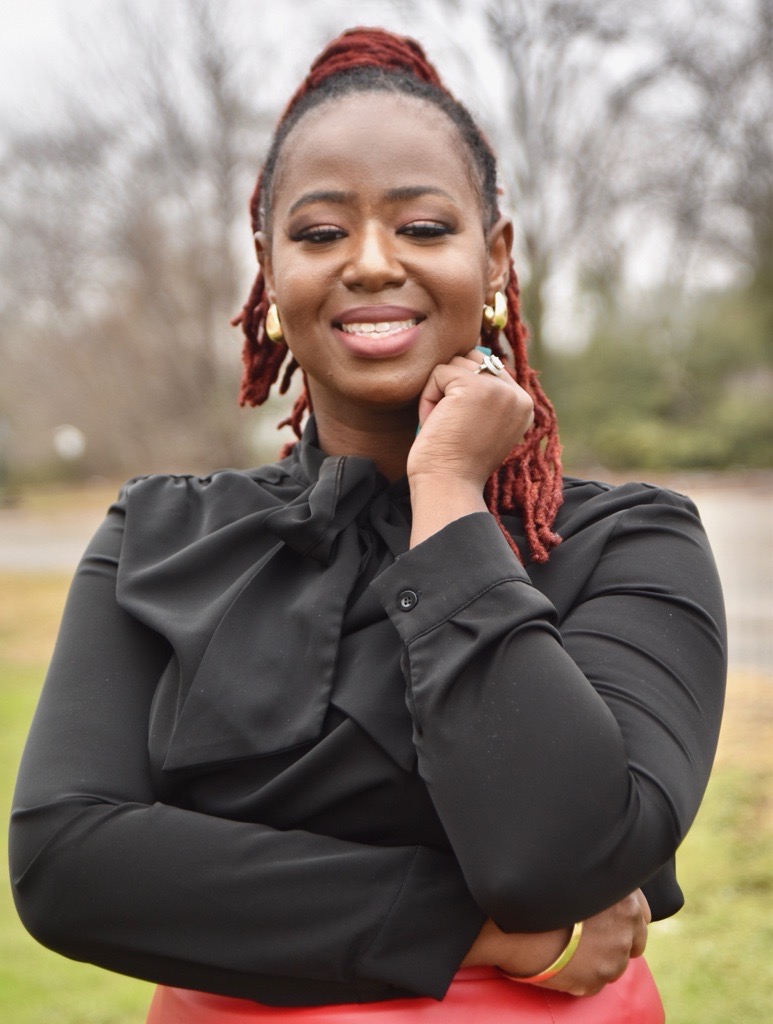
Today we’d like to introduce you to Dr. Dwala Chandler.
Hi Dr. Dwala, so excited to have you on the platform. So before we get into questions about your work-life, maybe you can bring our readers up to speed on your story and how you got to where you are today?
My journey has always been rooted in a deep commitment to people, purpose, and community. I began my academic path studying psychology, which sparked my passion for understanding human behavior and the factors that shape our experiences. That curiosity naturally evolved into a career in counseling and student affairs, where I had the opportunity to work closely with students navigating higher education—many of whom, like those I now research, were first-generation and commuting.
As I continued working in higher education, I saw firsthand the gaps that existed for students who didn’t fit the traditional college mold. That realization pushed me to pursue my Doctor of Education in Higher Education, where I focused my research on first-generation commuter students and their sense of belonging. Through that work, I was able to amplify student voices and better understand how institutions can create more inclusive, supportive environments.
Professionally, my path has led me to serve as the Director for Service Learning, where I get to bridge the gap between classroom learning and real-world impact. I work with faculty, students, and community partners to design meaningful experiences that not only enhance student learning but also strengthen our surrounding communities. In parallel, I serve as the Program Manager for Poly Main Street, a community revitalization initiative in southeast Fort Worth, where we focus on economic development, placemaking, and uplifting the voices of residents and small business owners.
What ties all of my work together is a commitment to creating spaces where people feel seen, valued, and connected—whether that’s on a college campus or within a neighborhood. My journey hasn’t been linear, but every step has been intentional, and it has led me to a place where I can lead, serve, and create impact in meaningful ways.
Would you say it’s been a smooth road, and if not what are some of the biggest challenges you’ve faced along the way?
Not at all—it hasn’t been a smooth road, and I think that’s an important part of my story.
Like many first-generation professionals, there were moments where I had to figure things out on my own without a clear roadmap. Navigating higher education—both as a student and later as a professional—came with a learning curve around systems, expectations, and even confidence in my own voice. There were times when I questioned whether I belonged in certain spaces, especially when I didn’t see many people who looked like me or shared similar lived experiences.
Professionally, one of the biggest challenges has been doing work that I deeply believe in—like service learning and community engagement—in spaces that don’t always immediately understand its value. I’ve had to advocate consistently, educate others, and sometimes push through limited resources or institutional barriers to bring ideas to life. That can be exhausting, especially when you know the impact the work can have on students and communities.
There have also been moments of stretching—balancing multiple roles, leading initiatives like Poly Main Street, completing my doctorate, and still showing up fully for students and the community. That required discipline, sacrifice, and a strong sense of purpose.
But through all of those challenges, I’ve developed resilience, clarity, and confidence. I’ve learned how to navigate systems while also working to change them. And most importantly, those struggles have shaped how I lead—I lead with empathy, intentionality, and a deep commitment to making the path a little smoother for those coming behind me.
So no, it hasn’t been easy—but every challenge has been meaningful, and it’s all part of what brought me here.
Alright, so let’s switch gears a bit and talk business. What should we know about your work?
At the core of what I do, I specialize in community and civic engagement within higher education. I serve as the Director for Service Learning, where I design and lead initiatives that connect academic learning to real-world impact. That means working with faculty to embed service learning into their courses, partnering with community organizations, and creating opportunities for students to apply what they’re learning in ways that truly matter beyond the classroom.
In addition to that, I lead Poly Main Street, a community revitalization initiative in southeast Fort Worth. Through that work, I focus on economic development, small business engagement, placemaking, and building authentic relationships with residents and business owners. It’s about creating a thriving, connected community—while making sure the people who already live and work there are centered in the process.
What I specialize in—and what I’ve really become known for—is bridging gaps:
Between universities and communities
Between theory and practice
Between students’ lived experiences and institutional structures
I’m also known for being a builder—I build programs, partnerships, and systems that create sustainable impact. Whether it’s launching faculty cohorts like I.M.P.A.C.T., developing service-learning initiatives across campus, or helping shape a Main Street program from the ground up, I enjoy taking ideas and turning them into something tangible and transformative.
What I’m most proud of is the impact on people. Seeing students feel a sense of belonging, watching them grow in confidence, and hearing community partners say, “This made a difference”—that’s everything to me. I’m also incredibly proud of completing my doctorate while actively leading this work and using my research to inform real change for first-generation commuter students.
What sets me apart is that I don’t just do the work from a theoretical lens—I live it, I lead it, and I center people in it. I bring both an academic foundation and a practitioner’s mindset. I understand systems, but I also understand relationships—and I know that real change happens when you bring those two together.
I lead with intentionality, authenticity, and a deep commitment to making sure the work is not just impactful, but also inclusive and sustainable.
What sort of changes are you expecting over the next 5-10 years?
Over the next 5–10 years, I really see community engagement and service learning becoming central to the mission of higher education, not just something that’s “nice to have.” Institutions are being called to show real impact—both in student success and in the communities they serve—so the work is becoming more intentional, more measurable, and more connected to outcomes like belonging, retention, and career readiness. I also see a shift toward more authentic partnerships, where we’re not just serving communities, but truly co-creating with them and centering their voices in the process. At the same time, there’s going to be a stronger emphasis on data and storytelling—being able to clearly show the impact of the work while also sharing the human stories behind it. Overall, the field is moving toward being more relational, more strategic, and more results-driven—and honestly, that aligns with how I’ve already been approaching this work.