





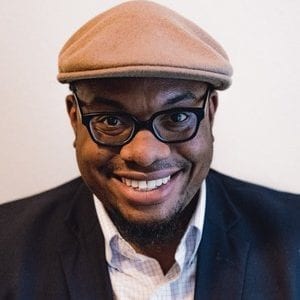
Today we’d like to introduce you to Zachary Nunn.
Thanks for sharing your story with us Zachary. So, let’s start at the beginning and we can move on from there.
Both sides of my family are from Mississippi and both were sharecroppers. I’m the first man to start and graduate from a four year university on my Mother’s side and a 2nd generation reader on my Father’s side.
When I started working as a fresh-faced college grad in 2011, I didn’t have uncles, aunts, cousins, etc. who could help me navigate majority white working spaces. Now, I’m a gregarious person, so I put myself out there over and over again to be mentored by anyone that would give me their time. I was often turned away, ignored, etc. but between the “L”‘s, I have picked up enough wisdom to hobble together a decent career thus far.
All of that said, about two years ago I asked myself “what does it look like for folks that look like me, with my experiences, who aren’t gregarious and who don’t want to put themselves out there and be rejected — they don’t know what they don’t know, how do they get insight so that they can thrive at work?” That’s where the idea of creating a platform that took the whispered points of meaningful advice Black and brown people infrequently receive and have them out loud.
Since launching in April of 2018, we’ve had hundreds of published media pieces where we’ve interviewed Fortune 500 leaders, activists, authors, professors, creatives, elected officials, entrepreneurs and influencers, all of them centering the perspectives of marginalized employees (e.g., Black, brown, LGBTQIA+, trans/non-binary, disabled).
Overall, has it been relatively smooth? If not, what were some of the struggles along the way?
The reality is, any time you explicitly push to advocate for Black and brown people you’ll face some adversity. We’ve had external pressures to broaden our platform to center white men in our work and stray away from certain terms and language (e.g., white supremacy, racism, white fragility). I honestly take that as a sign that we’re on track because we’re genuinely looking to include all perspectives (we’ve had white folks on), but we will always center the most marginalized.
Internally, I think it’s there’s a collective passion and effort to continue to grow and expand our footprint to go beyond only podcasting and continue to grow into a soft of media production company centered on Equity, Inclusion, and Diversity. Being a team of more than 1, we all have varying ideas of how that should look, but I take that as a positive because we’re all pushing towards the same goal.
Please tell us about Living Corporate.
Living Corporate is a multimedia company and we’re focused on Equity, Inclusion and Diversity. We’re known for having incredible guests on our podcast who aren’t afraid to be transparent and share “real talk” for our audience of black and brown millennial and gen-z professionals (folks that come to mind are DeRay Mckesson, Minda Harts, Michelle Gadsden-Williams, Pamela Fuller, Brittany Harris, Howard Bryant, Ruchika Tulshyan).
What sets us apart from the others and what we continue to be most proud about is…
1) We don’t shy away from having authentic conversations about the real challenges marginalized professionals face and we don’t apologize for it – here’s an example: we had Jennifer Brown, world-renowned Diversity and Inclusion expert on our podcast and instead of having a surface discussion on diversity, we got into the challenges of Diversity and Inclusion programs in really creating substantive changes for black and brown employees. We believe courageously grappling with the nuance and reality of lived experience not only better reaches our audience because they feel seen, but gives us a distinct level of credibility – engaging on our platform means you are willing to go beyond the buzzwords and general nice-talk that is standard in corporatized D&I spaces.
2) The amount of content that we produce weekly. Every Tuesday, you’re getting a 1-1 conversation with an exec, entrepreneur, activist, professor, etc. about navigating majority white spaces that is not only helpful for Black and brown folks but leaders of any background. Thursday, you’re getting a 2-3 min career tip from Tristan Layfield, our resident career consultant and Saturday is alternating between Latesha Byrd, another incredible career consultant and executive coach and Amy C. Waninger who’s talking to senior black leaders across a variety of industries to inspire our listeners to pursue a career in a space they may not be familiar with. This is all happening every week and we’ve yet to take a day off. In fact, with more of us being at home due to COVID-19, we’re looking to drop more content to help so many professionals who have never had to work from home before.
If you had to go back in time and start over, would you have done anything differently?
If we had to start over, we would have paced ourselves differently. The first year was challenging in that our team is all working full time somewhere else, so finding guests, recording content, writing blogs, etc. all at a fairly consistent clip can be tiring. We jumped out the gate firing. We kept up, but we were definitely building the car while driving it so it was more hectic and stressful than it had to be.
Contact Info:
- Website: www.living-corporate.
com - Phone: 2148836225
- Email: zach@living-corporate.
com - Instagram: https://www.
instagram.com/livingcorporate/ - Facebook: https://www.
facebook.com/ livingcorporatepodcast/ - Twitter: https://twitter.com/
LivingCorp_Pod - Other: https://linktr.ee/
livingcorporate


 Image Credit:
All logo design by David Dawkins
Suggest a story: VoyageDallas is built on recommendations from the community; it’s how we uncover hidden gems, so if you or someone you know deserves recognition please let us know here.