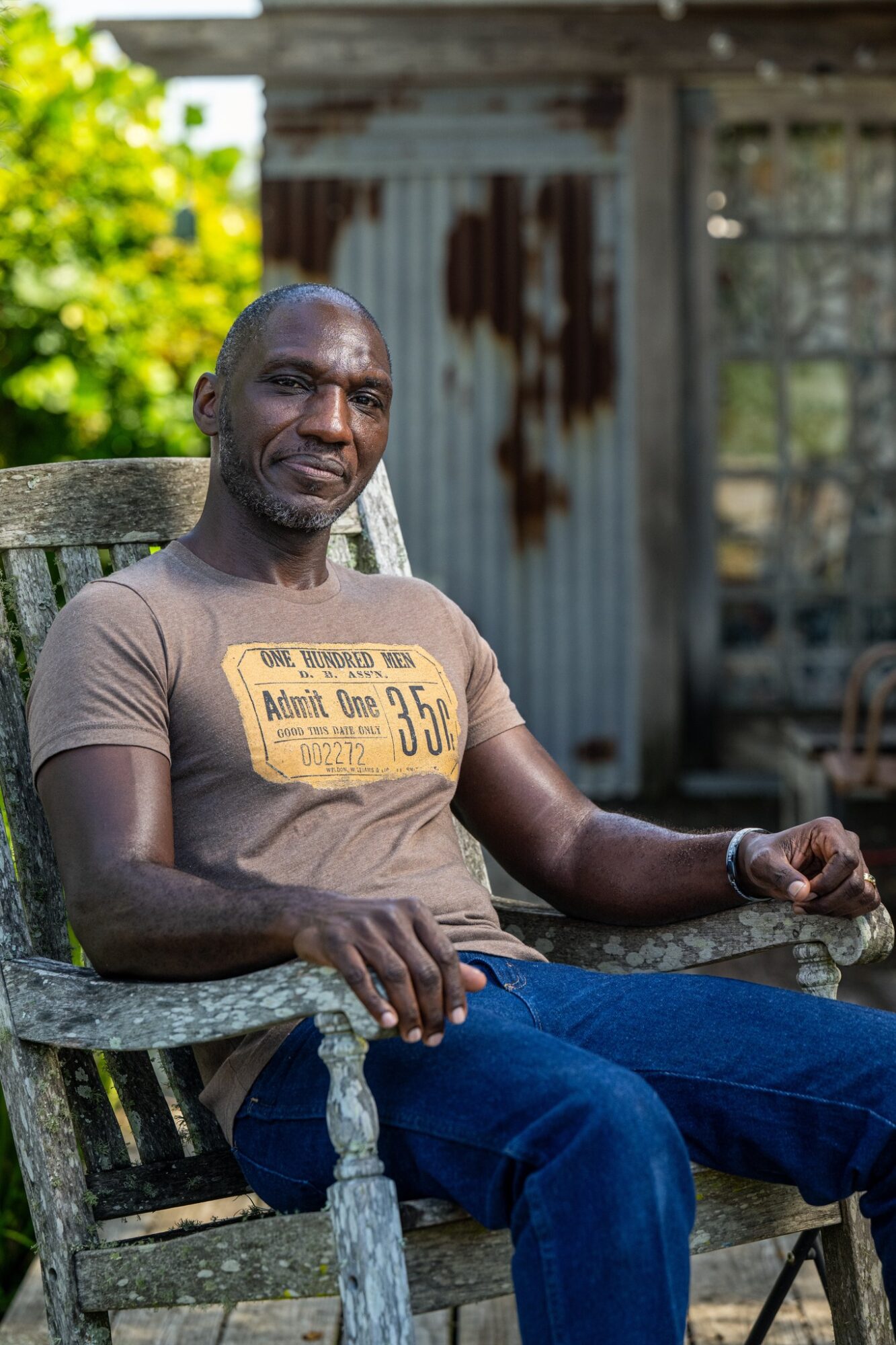






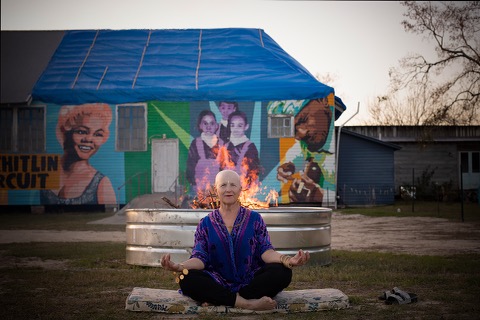
Today we’d like to introduce you to Rachel Dangermond.
Alright, so thank you so much for sharing your story and insight with our readers. To kick things off, can you tell us a bit about how you got started?
I was at a crossroads in my life, having been an investigative journalist with a large, independent Wall Street research firm for decades. I was reinventing myself to become a facilitator for difficult conversations on race and equity, as well as becoming a certified mediator, and had been blogging since 2004 as a writer. A friend sent me a text message that said – You should check this out – with a link to the 100 Men Hall. It took me to a real estate site that said, “Want to live in a blues hall?” And as I was in a difficult moment, I was mostly vexed she thought to send this to me because why on earth would I want to do that?
In May 2018, in a moment of work desperation while visiting Bay Saint Louis (I lived in New Orleans), my son and I came over to look at the 100 Men Hall, and when we walked through the front door, I knew with divine clarity that I would buy this place and do something – the something was based on the life I was reinventing for myself, but the reality of the last eight years has proven to be a strong tack left on what this narrative would be.
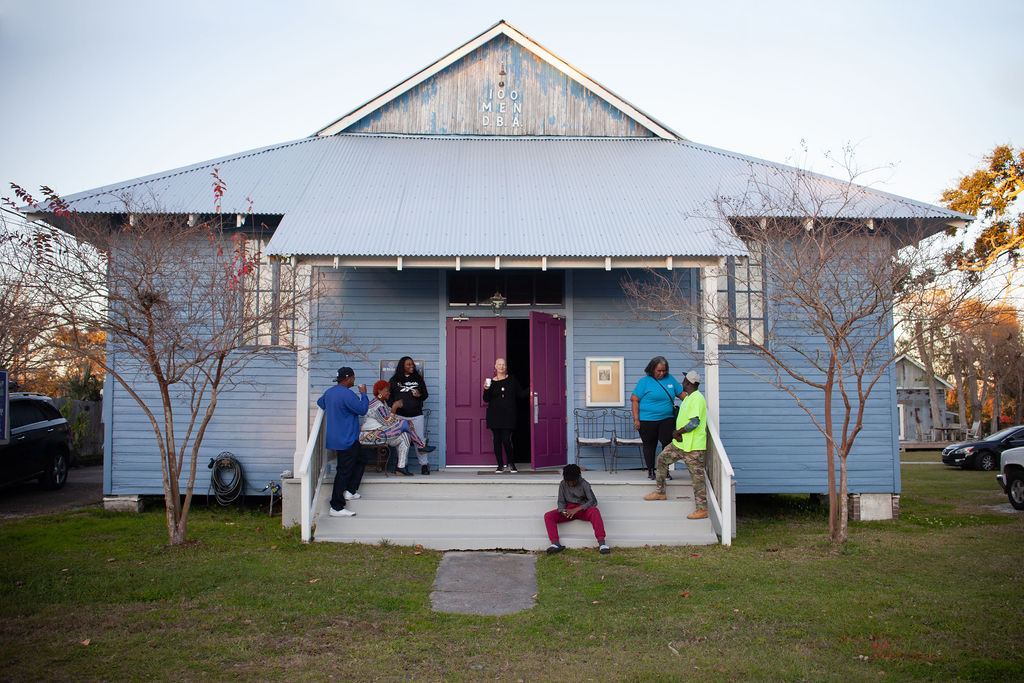
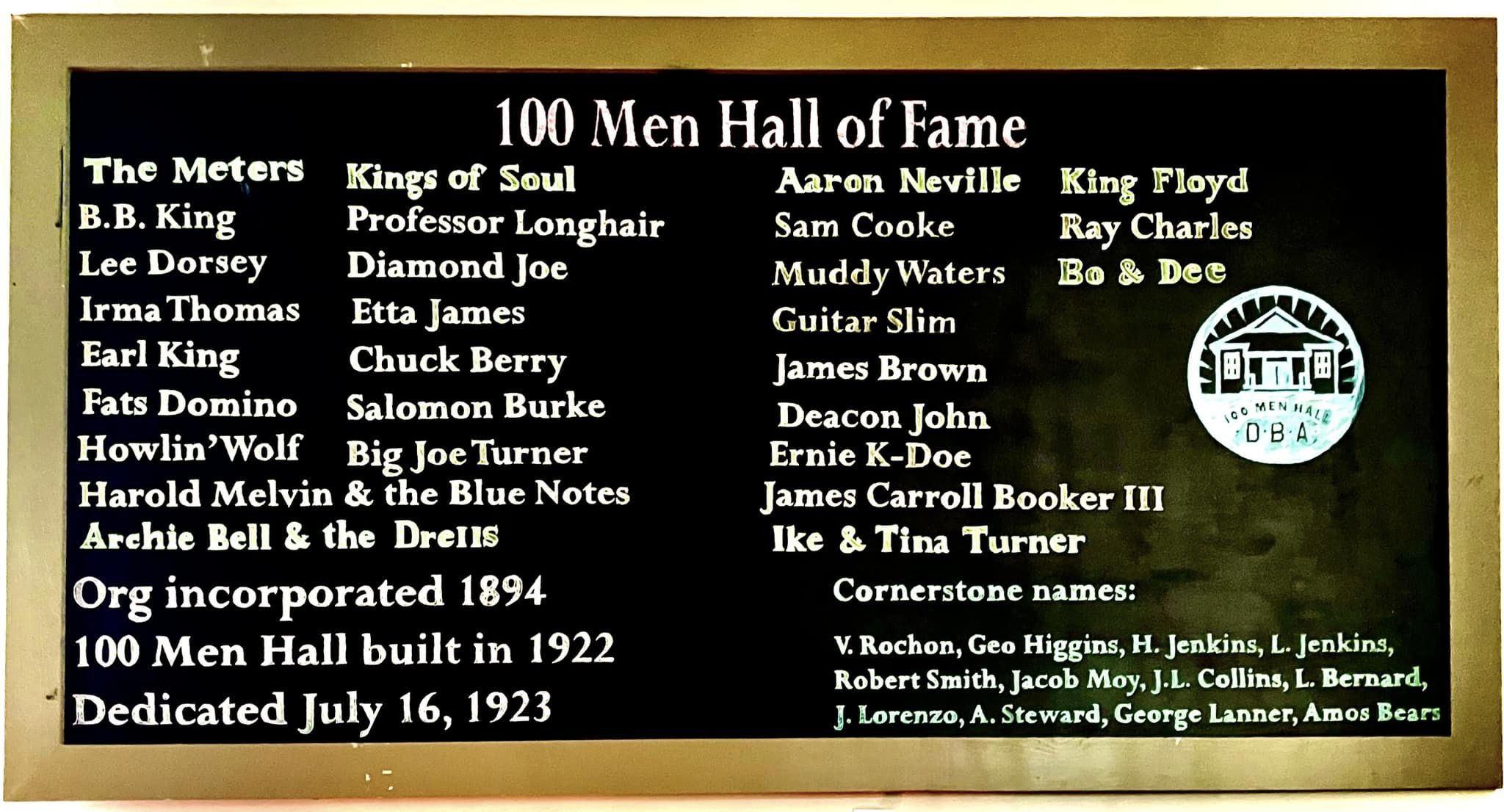
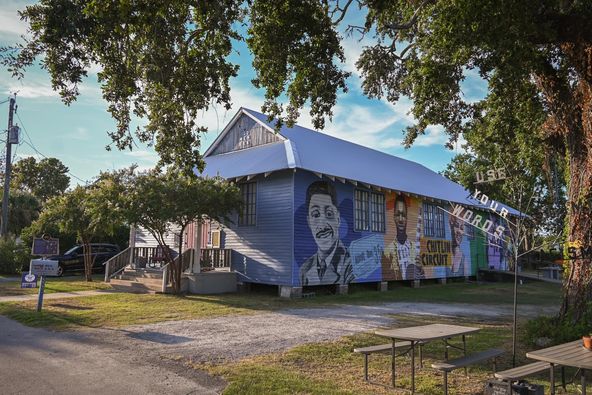
The 100 Men Hall was conceived and built by a group of Black men living in this area, who formed an organization in 1894 as a brotherhood to help their community. This was during the dark ages of segregation and Jim Crow, so for the Black community, most places to congregate were either the church, homes or any of the local joints. One of the members, Joseph Curry, worked on the railyard across the street and saw this land for sale – almost an acre – and bought it for $100 and deeded to the organization. The 100 Men Hall was built in 1922 and became a magnet of Black energy bringing together this community as well as soon to be traveling musicians and performers whose names are now legendary.
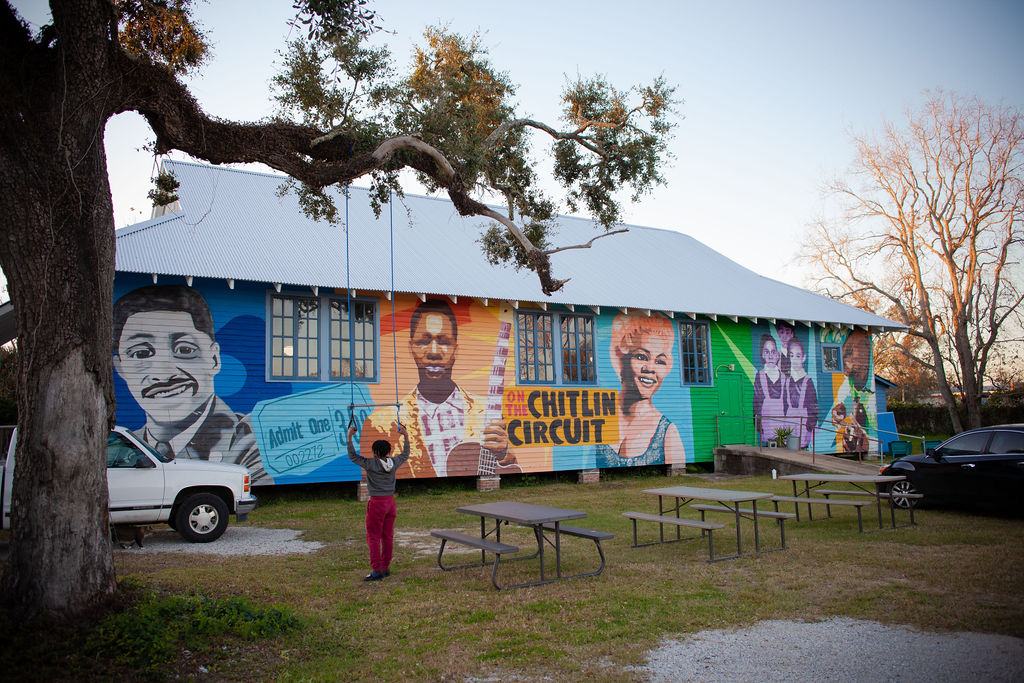
Juke joints like the Hall existed to provide succor for the Black community to gather, enjoy and meet for various reasons. They also nourished a burgeoning musical corridor that came to be called the Chitlin’ Circuit – a circuit that hosted the most famous American musicians in our history. The Hall existed as a place for the Black community solely until 1982, when it changed from Black to white hands for the first time. Much had changed with the Civil Rights Act, the rise of the DJ and vinyl, the entrance of Black music into white mainstream gay clubs, and a cultural change that had most young folks seeking places where their parents were not hanging out unlike days gone by where that was where the fun was and where it was safe to be.
It wasn’t long after purchasing the Hall that whatever plans I had had for it rapidly diminished as its own story emerged. I went to the local grocery store and an older man stocking cans on the shelf said, “You the lady that bought the Hall. I remember when I was little boy, I snuck in behind my brother’s legs and saw Sam Cooke playing.” Or the woman with the long dreadlocks who rode her bike by one day when I was in the yard, who said, “When I was a little girl, I was 13 and couldn’t go in, so I sat on the front steps and Etta James was on stage, and I could hear her so loud and clear. even though the doors were closed.”
I purchased the Hall with no blueprint for what would come next. Everything that followed organized itself, I invited the Black community to return and have ownership of their history and story, I wanted to continue the sacred act of hosting live music and to use art to tell the story of this unique place. I have felt not like an owner, but a custodian with a mandate to protect and preserve this historical landmark and its stories. What I brought to the table was to widen its mission to celebrate and elevate cultural difference in more than just the Black community but also the Latino, Jewish, and LGBTQ communities, particularly these who don’t generally get their day in the sun.
Would you say it’s been a smooth road, and if not what are some of the biggest challenges you’ve faced along the way?
When I bought the Hall, I was under the impression the nonprofit – Hundred Members Debating Benevolent Association, Inc – formed in 1894 and registered as a 501c3 – still existed. What I found out instead was the previous owners had not taken care of business and to have this particular nonprofit reinstated required me to pay fines and sign a consent agreement and some folks were counseling me to just start a new 501c3. In preservation of the story, I couldn’t in good conscience associate another nonprofit with this building, so I paid the fines, signed the legal documents, and finally was able to open the doors.
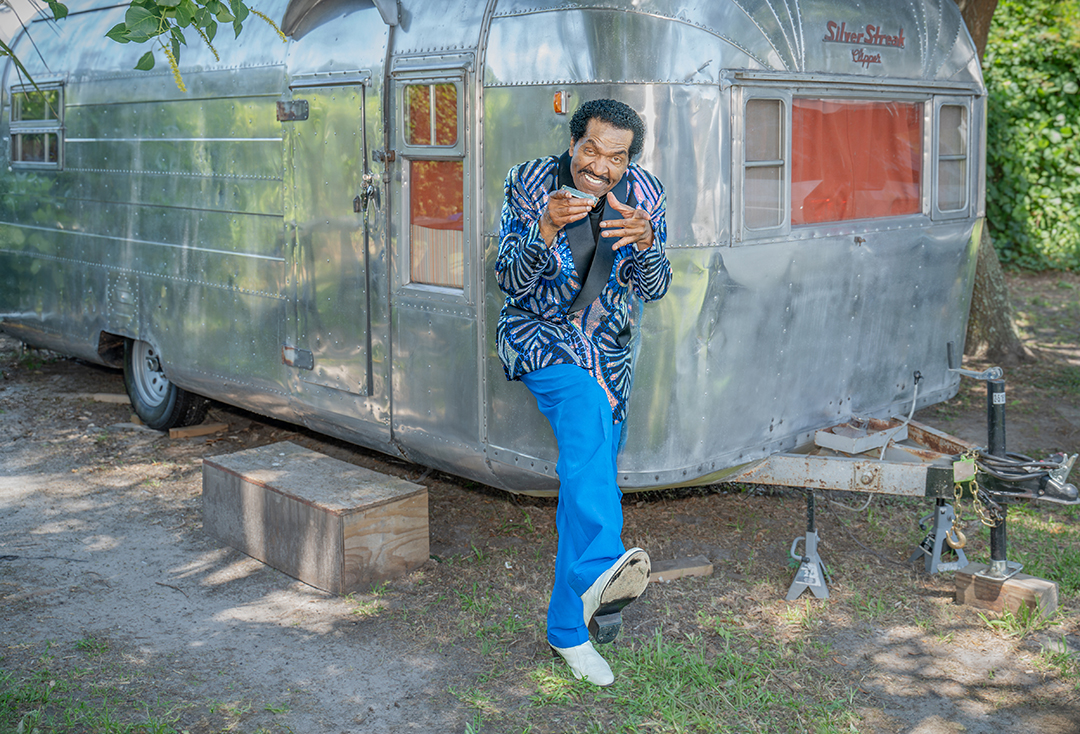
As a result of not having the nonprofit, I couldn’t open the Hall to the public. Instead, a local artist, Ann Madden, called me and asked if her group could use the Hall for a private fundraiser for a candidate running for State Senator in Mississippi. That event ended up being the first at the Hall during my tenure and the musical act was Cedric Burnside (accompanied by Brian J from the Pimps of JoyTime). My first meeting with Cedric solidified a kinship, and we remain to this day, family. Cedric returns to the Hall annually around the first of May, my and his wife’s birthday, and plays a blues brunch even while his touring takes him all over the place.
Another incident happened when one day, I was cleaning the Hall and a man knocked on the door. He said he wanted to know what was going on in here. Since he was middle age and Black, I was curious that he didn’t know about the Hall. He said he was on a tour across the street. He came in and looked around and I told him the story of the Hall as I knew it then – it was 2019 and I was still learning its stories – and I got very emotional (still do) in the telling, and I started crying and he started crying, and next thing you know we were hugging. He left, and about 15 minutes later, a large tour bus pulled up and he came in and said he wanted everyone on the tour to hear what I told him.
So they all came in and sat down and I repeated the story to this audience of 80 middle age to elderly Black folks who were on a bus tour of Bay Saint Louis. I was curious as to how a busload of Black tourists came to this area and were not being guided to the Hall – surely the best part of the Gulf Coast’s history. No one knew the answer but the tour director said she was going to find out. We all hugged and they left with photos and stories to tell. Then I learned that the local tourism office had not included the Hall on Diamond Tours contract.
This is a very long story, but the summary is the buses were scheduled to come to the Hall every Thursday after that day – two busloads staggered in the mornings – and the same thing happened each time, an entire busload would pull up, and I would tell the story of the Hall. We’d all cry, we’d all hug, and everyone would take photographs. 100% of the folks on the bus were Black. Three weeks into this routine, the tourism director called to say the buses could no longer come because there had been a complaint. She said someone complained because I had a Black Lives Matter poster up, and I needed to remove it before the tours could resume.
Today, the Black Lives Matter poster is still hanging and we have added another, Diamond Tours took no responsibility when I went up the chain trying to find out who complained, the tour director finally admitted she was the one who had the issue, she told me when I went to her office that “those people have ruined our history for my nephews” referring to the removal of Confederate statues in New Orleans. Luckily, I had spent a decade training for these conversations and had been part of the removal of those statues. The tourism director has since passed away. Every time, I walk around the corner and see Diamond Tour buses stopped in front of the church, and I see all of the Black folks getting on and off the bus only two blocks away from the Hall, with its signpost that begins the Mississippi Blues Trail, with its awe inspiring story of self-reliance and Black American Music and brilliance, I take a deep breath. That tourism director left her mark as she signed a five-year contract before she passed away ensuring visitors do not hear a more nuanced story of how a community overcame both manmade and natural disasters to leave a legacy of joy. There are many other stories of struggles along the way but perhaps these two stand out the most.
Can you tell our readers more about what you do and what you think sets you apart from others?
I have been a writer all of my life and most of my career. I had visions of becoming a famous literary writer going by a pen name like Madonna or Prince. Ha! Instead I blogged my way through Katrina or as we call it, the 2005 Federal Flood. I investigated public companies as diverse as John Deere to NBC Universal on Wall Street then to my surprise, became an impresario. Nothing on my resume prepared me for this work of running 100 Men Hall and telling its story, but all of my life has been a staging ground for it.
I am Sephardic, raised in the US and Central America as well as Puerto Rico, and at 50 years old I adopted my son who is Black and raised him Jewish. Since he was born in Indiana, it’s very likely his ancestors are from Mississippi, but I had planned to raise him the most African city in the US, New Orleans. Instead, he had his bar mitzvah in an African American landmark in Mississippi. Who knew?
I came to Bay Saint Louis in flight from our life in New Orleans. My son was young, the city was still drowning under the post-Katrina dysregulation of water and resources, and I was searching for somewhere to land. I have always followed the mantra: give me a place to stand and I will move the world. I didn’t know my place would be this one where a community rose up to meet me, it has been a tremendous experience that still bewilders and delights me.
Is there something surprising that you feel even people who know you might not know about?
I have had to reinvent myself many times, but I came to this world loaded with many stories to tell. I am a product of my father’s tribe, Sephardim, who were kicked out of Spain, went to Turkey where they then had to leave under laws that negatively affected Jews, they landed in Cuba where they lived till I was almost born, and left when a revolution forced us out and I was born in Miami. My Sephardic family’s journey reads like a blueprint of the Jewish diaspora. My mother’s family came to this country in the 1500’s and worked the land till they got to Franklinton, Louisiana and are still farming the area. I always believed I knew what it was like to be other, until I met my son, who is African American, whose skin color caused me to rethink the brutality of othering. I think what would surprise people is I always wanted a normal life that I thought other people were living, and instead I was given this extraordinary life that took me years to appreciate.
Contact Info:
- Website: https://100menhall.com/pages/our-story
- Instagram: @100menhall
- Facebook: @100menhall
- Twitter: @100menhall
- Youtube: @100menhallbaysaintlouisms
- Yelp: https://www.yelp.com/biz/1100-men-hall-bay-st-louis?utm_campaign=www_business_share_popup&utm_medium=copy_link&utm_source=(direct)
- Other: https://www.dangermond.org