





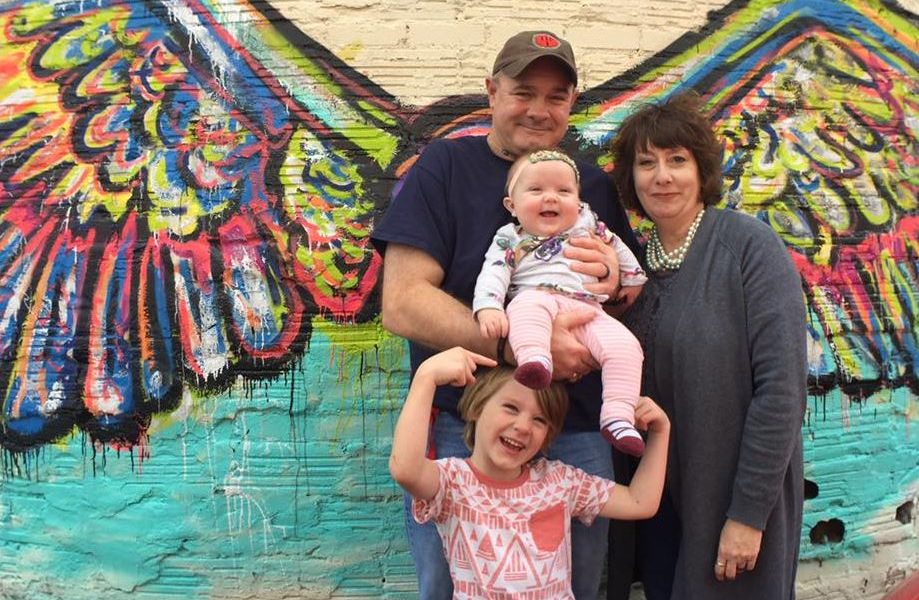
Today we’d like to introduce you to Charles “Keith” David.
Thanks for sharing your story with us Charles. So, let’s start at the beginning and we can move on from there.
We formed the Foundation in 2009. Initially, there were four of us: Frank Antenori, Ben Bethke, Rick Walker, and myself. All four of us are retired Army Special Forces. The Special Operations community is a very tight community. When we discovered that some of our brothers had needs that were not being met, that fact bothered us. As we talked about what was going on and was there anything that we could do. The short answer was yes, we decided to form the charity and help those who had needs that were not being fully met. We formed as a grass roots organization.
In other words, we didn’t have any large donors that backed us – we still heavily depend on small donations to raise funds for our mission. Over the last several years, we have started receiving donations from corporations and individuals who are helping to increase our capacity to help; however, it seems that no matter how much we have donated, the needs continue to grow, especially within the Special Operations Forces (SOF) units. SOF units are deployed 24/7/365 around the world protecting us and risking their lives. Our phones are never silent and we have many many needs that need to be met.
One has to realize that the military and VA honestly and sincerely try to do the best that they can under guidelines set by the US Government. There are rules and regulations that must be adhered to even when one is wounded, ill, injured, or a veteran with disabilities. The US Special Operations Command (USSOCOM) realized that as well and formed the US Special Operations Care Coalition – now known as the US Special Operations Warrior Care Program. When we formed Task Force Dagger Foundation, we forged a very close relationship with USSOCOM Warrior Care Program so that we could truly help where needed.
This relationship is beneficial in ensuring that the needs of our special operations members and their families are met in two ways: 1. The Warrior Care Program has advocates located at every Special Operations Command unit worldwide. If there is a need, the unit can immediately reach out to the Warrior Care Program Advocate and request assistance. 2. Vetted and valid needs: because the request comes through the Warrior Care Program, we know that the need is valid, real, and truly needed by the service member and/or his or her family. This saves the Task Force Dagger Foundation money in vetting and ensuring that the need is real. This enables us to respond and respond quickly – on average, within two hours from when we get the call to when support is provided to the family.
Something that we have identified as a key factor in being there for our service members and their families is this: if the service member has a MISSION * PURPOSE * FOCUS for their life, they are more likely to successfully fully recover and make the transition from the military to civilian life.
When you go from having a real world mission where every decision you make could have national security implications and you then transition to civilian life, it is often hard to find something that is as rewarding and challenging as what one experienced in special operations. Add to that if the service member left due to wounds, an injury, or an illness before they were ready to leave and you have additional stress and unhappiness. Finding that MISSION is critical, having a new and rewarding PURPOSE is critical, and being able to FOCUS on that mission and purpose gives drive and determination. The second factor that often makes a huge difference is the support of a loving family. With a real purpose for your life and a team standing with you, our service members can overcome many obstacles and challenges that they may otherwise not be able to address. Understanding this helps us to reach those who need help the most and educate and empower them.
This past year, we supported 554 families with $1.2 million dollars with an overhead rate of 7.57%. So, 92 cents out of every dollar go to the programs and services supporting our SOF families – and we could have done more, much more, if we had the funding. No matter how much we support, we have needs that continue to poor into the foundation.
Great, so let’s dig a little deeper into the story – has it been an easy path overall and if not, what were the challenges you’ve had to overcome?
No, the road has not been smooth. None of us who started the foundation had ever worked in the nonprofit world. It took a lot of research, studying, trial and error to get where we are today. The three greatest challenges that we face are probably the greatest challenges all nonprofits face: fundraising, remaining true to your core charter, and adapting so that you stay relevant.
Fundraising: every year, we do a budget and we fund our programs according to that budget, but we can only fund based on what is donated. We work extremely hard to create a realistic budget based on the patterns and trends of past years. If we fall short, and we usually do, we have to shift our focus to where the needs are. This oftentimes forces us to cancel some of our Recreational Therapy Events and support in that area. Unfortunately, it is a matter of prioritization, shifting focus to where the need is, and making the hard decision where to cut.
Remaining True to your Core Charter: It is our responsibility as the Board of Directors to make sure that we stay focused on what our true mission is and ensure that every penny is accounted for and put where it needs to go: to the SOF service member and family in need. Based on this, we don’t advertise, nor do we put on large fundraisers if it comes out of the Foundations budget. Two items create “Overhead” expenses: fundraising and management expenses. We are very careful and critical when it comes to spending funds that fall into those two areas. We ask questions such as: what does it cost to do the fundraiser? Can we get a donor to cover the cost or to execute the fundraiser and present the foundation a check? Our basic guideline is that we spend no more than 15% of what we believe the fundraiser will bring in. An example is if we believe that we can raise $100,00 dollars, the cost to raise that should be no more than $15,000. This keeps the overhead down. We try and make it leaner and come in under the budget. At the end of the day, our MISSION is to support our core demographic the best way we can and to the full extent possible.
Staying Relevant: The third challenge is staying relevant. As time passes, an organization needs to look at the demographic it is supporting and ask itself: “are we meeting the all the needs that are surfacing?” or “is there another area that is emerging that needs to be addressed?” We find these answers by querying SOCOM, but also by looking at patterns and trends on social media and word of mouth. What led us to our newest program was a combination of all the questions referenced above. We also look at our sister nonprofits to make sure that we aren’t straying into a lane that is already being covered. While some overlap is okay as it makes sure that everyone is covered, one wants to stay away from duplication. All of these, and more, go into the decision making process as we strategically review where we are and where we need to go.
We recently added a third program to our core: SOF Health Initiatives. Many of our SOF servicemen and women work and fight in austere environments. We provide our SOF personnel and their families with care and treatment that is designed to treat the problem and not the symptom. Treating the whole body and healing the person versus treatment where providing prescription medication as the answer. We also look at how to teach the person how to take better care of their body through proper nutrition and exercise. Our MISSION is to keep our service men and women capable of performing at the highest levels naturally and making sure that when they retire or leave the service, that their quality of life the best it can be.
The reality of the situation is that many of the people that we help end up going through all three of our programs. To me, this means that we are truly helping people and not with merely putting a band-aid on a wound, but we are providing true programs that address real needs that culminate with the family healing, emerging stronger, healthier and more confident.
My best friend and wife of 32 years, Keline, also works with me. This Foundation is our passion, no – it is our ministry, and I could not do it if it were not for her and her “all in” support. We often banter about when we talk and one of the expressions that always get mentioned is, “if it were easy, anyone could do it.”
Please tell us about Task Force Dagger Foundation.
Task Force Dagger Foundation provides programs and services in three core areas: Immediate Needs, SOF Health Initiatives, and Recreational Therapy Adaptive Events.
1. Immediate Needs: when called upon, TFD assists Special Operations personnel and their families with needs that are not covered by the Military, DoD, VA, or their insurance. Our average response time from request to support is ~two hours. This can be anything from an airplane ticket to the bedside of a loved one to covering out of pocket expenses when a spouse is in the hospital.
2. SOF Health Initiatives: TFD assists SOF personnel and their families with care and treatment that is designed to treat the problem and not the symptom. We look at treating the whole body and how to heal the person versus treatment where providing prescription medication as the answer.
We are working with various organizations on ways to treat Post Traumatic Stress (PTS), Traumatic Brain Injuries (TBI), and environmental exposures that over time will affect the Service Member’s quality of life and health.
3. Recreational Therapy Adaptive Events (RTAE): TF Dagger sponsors activities that foster a sense of well-being, offer encouragement, and assist the service member’s rehabilitation and recovery from wounds/injuries sustained while serving our country.
What sets us apart? it is the fact that we cover the family. Not only with immediate needs, but also with our health and recreational therapy adaptive programs. One of our core beliefs is that if the service member is injured, the whole family is injured and must heal together, BUT when that husband is deployed, he must have the confidence that if something happens to his family, he knows that they will be covered. Teamwork is more than being on a Team, it is being part of a family that is stronger together. As such, when we conduct a therapy event, we bring the whole family and include the whole family in the activities. Our activities include Scuba, 3 Gun shooting events, and Outdoor activities such as white water rafting, fishing, sailing, horseback riding, skiing, and snowmobiling.
We have supported many many service members, but one case sticks out. We received a call on a Friday evening that the wife and small children of one of our service members had died. The husband was deployed in a combat zone and was being brought home. As soon as we received the call, we coordinated hotel rooms (and prepaid for them) for the family arriving to care the service member. We also covered the service members hotel room and also the hotel room for the chaplain. You might ask: why the chaplain? Doesn’t he live near there? The answer goes back to the rules and regulations that the military must follow. Units don’t have the ability to pay for that kind of support and the chaplain could not use his government credit card for a hotel in the same area he is stationed; therefore, it fell upon a benevolent organization to provide the support…and we did.
In order to provide as much as we can, we are very strict in our spending and we work very hard to maximize our donor dollars. Our overhead rate is 7.57% and this means that over 92 cents out of every dollar goes to programs and services. To us here at TFD, our integrity and ethical practices are not just a saying, but part of our ethos. That is why we post our financials online so that people can see where their donations go. Keeping trust isn’t just about the donor, but also about our brothers and sisters and their families that we support.
Do you look back particularly fondly on any memories from childhood?
Wow, that is a hard question. I was very lucky. My Mom and Dad did the best they could and provided my brother and I with, honestly, more that we needed. I think most parents try and do that. My Dad worked for the MK&T Railroad (later merged with the Union Pacific) in Denison, Texas, and my Mom worked as well. We were not rich by any stretch of the imagination, just your average middle-class family. I played football for the Denison Yellowjackets and just did what every other kid did growing up.
The best memories I have of my childhood are the trips we took to California to see my Grandma.
We would go camping in National Parks on the way out and on the way back. We were able to see some of the greatest parks that our country has and it brought our family together. My Dad passed away this year and before he passed, I wrote him a letter letting him know how much those camping trips meant to me and that I was trying to pass that same love for our National Parks and our country to my kids and hopefully to our grandkids.
Contact Info:
- Address: Task Force Dagger Foundation
12655 North Central Expressway
Suite 340
Dallas, Texas 75243 - Website: www.taskforcedagger.org
- Phone: (214) 785-7559
- Email: info@taskforcedagger.org
- Instagram: https://www.instagram.com/taskforcedagger/
- Facebook: https://www.facebook.com/TaskForceDaggerFoundation/
- Twitter: https://twitter.com/TFDaggerFDN


Image Credit:
TFD Staff